Money transfer is the process of moving money from one person, bank account, or financial institution to another. People use money transfer services for many purposes, including paying bills, supporting family members, sending money internationally, receiving business payments, and managing personal finances.
With online banking, mobile applications, digital wallets, and international remittance services, transferring money has become easier than traditional cash-based methods. However, transfer fees, exchange rates, processing times, and security requirements can vary significantly between providers.
This guide explains how money transfers work, the different types available, common costs, security considerations, and factors to consider before choosing a transfer method.
What Is a Money Transfer?
A money transfer is a financial transaction in which funds are sent from one account or person to another. Depending on the service, the sender and recipient may use bank accounts, debit cards, credit cards, digital wallets, or other supported payment methods.
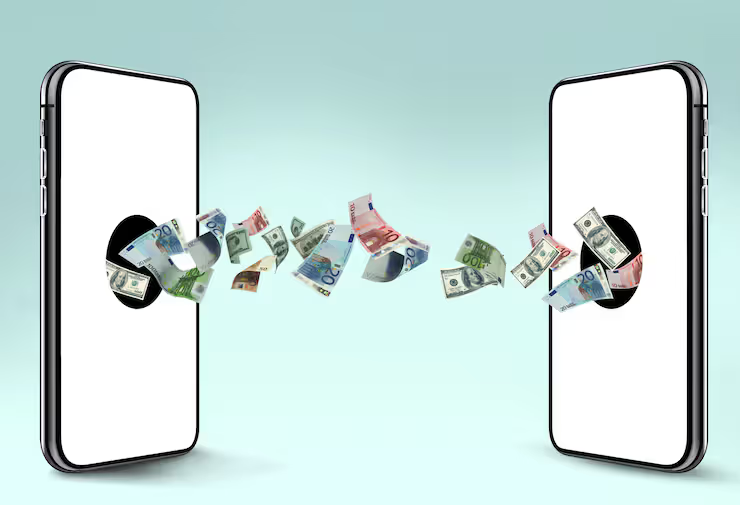
Money transfers can be domestic or international. A domestic transfer generally involves sending money within the same country, while an international money transfer involves moving funds across national borders.
How Does a Money Transfer Work?
Although the process varies by provider, a typical transfer follows these steps:
- The sender chooses a transfer provider.
- The sender provides the recipient's required information.
- The transfer amount and applicable fees are displayed.
- The sender selects a payment method.
- The provider processes the transaction.
- The recipient receives the money through the selected delivery method.
International transfers may involve currency conversion, intermediary financial institutions, and additional compliance checks.
Types of Money Transfers
Different transfer methods are designed for different needs. Understanding the main options can help consumers compare cost, convenience, and processing time.
Bank Transfers
Bank transfers move money directly between bank accounts. They are commonly used for personal payments, salary payments, bill payments, and business transactions.
Domestic bank transfers may be processed relatively quickly, while international bank transfers can take longer depending on the countries and financial institutions involved.
International Money Transfers
International money transfers allow individuals and businesses to send funds to another country. These services are commonly used for family remittances, overseas expenses, education payments, travel, and international business transactions.
The total cost can include a transfer fee and a currency exchange cost.
Digital Wallet Transfers
Digital wallets allow users to store funds electronically and send money through an online platform or mobile application. Availability, transaction limits, withdrawal options, and fees depend on the provider and country.
Cash Pickup Transfers
Some money transfer services allow recipients to collect funds in cash at participating locations. This can be useful when the recipient does not have convenient access to a bank account.
Card-Based Transfers
Some services allow users to fund transfers using debit or credit cards. Card-funded transactions may have different fees and processing rules compared with bank-funded transfers.
Money Transfer Fees
Fees are an important consideration when comparing money transfer services. A transfer that appears inexpensive may have other costs associated with currency conversion or payment methods.
Common Money Transfer Costs
Depending on the provider, costs may include:
- Transfer fees
- Currency conversion charges
- Exchange-rate margins
- Card processing fees
- Receiving fees
- Intermediary bank charges
- Cash pickup fees
The actual cost depends on the transaction amount, destination country, payment method, and provider.
How to Compare Transfer Costs
Instead of looking only at the advertised transfer fee, compare the total amount paid by the sender with the amount received by the recipient.
For international transfers, pay particular attention to the exchange rate because a difference in the rate can affect the final amount received.
Understanding Currency Exchange Rates
Currency exchange rates determine how much one currency is worth relative to another. When money is transferred internationally, the sender's currency may need to be converted into the recipient's currency.
For example, if someone sends money from the United States to India, the transaction may involve converting U.S. dollars into Indian rupees.
Why Exchange Rates Matter
Even when a provider advertises a low transfer fee, the exchange rate can influence the overall cost of an international transfer.
Consumers should therefore compare:
- The exchange rate offered
- The transfer fee
- The amount the recipient will receive
- Any additional charges
Exchange rates can change frequently because currency markets are constantly changing.
How Long Does a Money Transfer Take?
Transfer times depend on the method, provider, destination, currency, and verification requirements.
Some domestic digital transfers can be completed quickly, while international bank transfers may take longer. Transfers may also be delayed by weekends, public holidays, compliance reviews, incorrect recipient information, or intermediary financial institutions.
Factors That Can Affect Transfer Speed
Several factors may influence processing time:
- Transfer method
- Destination country
- Banking hours
- Currency involved
- Recipient's financial institution
- Identity verification
- Compliance checks
- Public holidays
- Incorrect account information
A provider's estimated delivery time should be treated as an estimate rather than a guarantee.
Is Online Money Transfer Safe?
Online money transfers can use security technologies and identity verification procedures to protect transactions. However, users should still take precautions because scams and unauthorized transactions can occur.
Money Transfer Security Tips
Before sending money online:
- Use a reputable financial service or regulated provider.
- Check the website address before entering financial information.
- Use strong, unique passwords.
- Enable multi-factor authentication when available.
- Never share one-time passwords or security codes.
- Verify the recipient's details carefully.
- Avoid sending money to unknown individuals.
- Be cautious of urgent payment requests.
- Keep transaction receipts and confirmation details.
- Contact the provider promptly if you notice an unauthorized transaction.
A legitimate provider should not require users to share confidential authentication codes with another person.
Common Money Transfer Scams
Scammers may use money transfers because transactions can be difficult to reverse once completed.
Common schemes include fake investment opportunities, impersonation scams, romance scams, fraudulent job offers, fake prize notifications, and requests for emergency payments.
Warning Signs of a Potential Scam
Be cautious if someone:
- Demands immediate payment
- Promises unusually high financial returns
- Requests payment through an unusual method
- Claims you have won a prize you did not enter
- Asks for your banking password or authentication code
- Pretends to be a government official or financial institution
- Refuses to provide verifiable information
- Uses pressure or threats to make you send money
If a transaction appears suspicious, stop before sending funds and independently verify the request.
How to Choose a Money Transfer Service
There is no single money transfer provider that is best for every situation. The appropriate choice depends on the user's location, transfer amount, destination, payment method, and delivery requirements.
Compare Total Costs
Look beyond the headline transfer fee. Compare the final amount that the recipient will receive after fees and currency conversion.
Check Transfer Limits
Some services impose daily, monthly, or transaction-based limits. Higher-value transactions may also require additional identity verification.
Review Supported Countries and Currencies
Not every service supports every destination or currency. Confirm that the provider supports both the sending and receiving locations before starting a transfer.
Consider Customer Support
Reliable customer support can be important if a transfer is delayed, rejected, or sent incorrectly. Check what support channels are available and when they can be reached.
Review Security and Regulatory Information
Financial services may be subject to different regulatory requirements depending on the country where they operate. Users should review the provider's official information about licensing, security, privacy, and consumer protection.
Money Transfer for International Remittances
International remittances are payments sent by individuals to recipients in another country. Migrant workers, international students, families, and businesses may use remittance services for different purposes.
The cost of sending remittances can vary depending on the destination, transfer amount, currency conversion method, and delivery channel.
Reducing Unnecessary Transfer Costs
Consumers can potentially reduce costs by comparing multiple providers before sending money. Consider the complete transaction rather than choosing a service solely because it advertises a low upfront fee.
It can also be useful to check whether the recipient will be charged a fee and whether the provider applies different exchange rates depending on the delivery method.
Money Transfer for Businesses
Businesses frequently transfer money to suppliers, contractors, employees, customers, and international partners.
International business payments can involve additional considerations such as currency conversion, transaction records, payment verification, tax documentation, and compliance requirements.
Business Payment Considerations
Businesses may want to evaluate:
- Transaction fees
- Foreign exchange costs
- Transfer limits
- Payment processing times
- Account security
- Reporting features
- Transaction records
- Supported currencies
- International payment capabilities
Businesses should maintain appropriate financial records and follow applicable tax and regulatory requirements.
What Information Is Needed for a Money Transfer?
The information required depends on the transfer method and destination.
A provider may request information such as:
- Sender's legal name
- Recipient's legal name
- Recipient's bank account information
- Bank or financial institution details
- Destination country
- Transfer amount
- Identification documents
- Purpose of the transaction
For international transfers, additional information may be required under applicable financial regulations.
What Happens If Money Is Sent to the Wrong Person?
Sending money to the wrong recipient can create significant problems. Depending on the transfer method, it may be possible to request cancellation or recovery, but there is no guarantee that funds can be recovered.
Contact the transfer provider as soon as possible if incorrect recipient information was entered.
Keep the transaction reference number, payment receipt, and relevant communication available when contacting customer support.
Money Transfer and Financial Privacy
Financial transactions involve sensitive information. Users should understand how a provider collects, stores, processes, and shares personal and transaction data.
Before using a financial service, review its privacy policy and security information. Avoid entering financial credentials on unfamiliar websites or through links received in unexpected messages.
Frequently Asked Questions About Money Transfer
What is the cheapest way to transfer money?
The cheapest option depends on the amount, destination, currency, payment method, and provider. Compare both transfer fees and exchange rates to determine the overall cost.
How can I send money internationally?
International money can generally be sent through banks, licensed money transfer providers, digital financial platforms, or other supported payment services. Availability varies by country.
How long does an international money transfer take?
Processing times vary. Some transfers may arrive quickly, while international bank transactions can take longer because of banking procedures, intermediary institutions, verification, weekends, and holidays.
Are money transfers taxable?
Whether a transfer has tax implications depends on the nature of the payment, the countries involved, the amount, and applicable tax laws. Sending money to another person does not automatically mean that the transaction is taxable, but certain payments may have reporting or tax requirements.
For significant transactions, consult an appropriately qualified tax professional or the relevant tax authority.
Can a money transfer be canceled?
Cancellation depends on the transfer provider, transaction status, and delivery method. Once funds have been collected or deposited, cancellation may no longer be possible.
What should I do if I suspect a money transfer scam?
Do not send additional money. Contact the transfer provider through its official customer-support channel as soon as possible and report suspected fraud to the appropriate authorities.
Final Thoughts
Money transfer services provide convenient ways to move funds domestically and internationally. However, the cheapest advertised fee does not necessarily represent the lowest overall cost.
Before transferring money, compare the total cost, exchange rate, delivery time, supported payment methods, transfer limits, security measures, and applicable requirements. Verifying recipient information and recognizing common scams can also help reduce the risk of financial loss.
Financial services and regulations can change over time and vary by country. For important or high-value transactions, users should consult the official information provided by the relevant financial institution or a qualified financial professional.
Disclaimer: This content is provided for informational and educational purposes only and should not be considered financial, investment, tax, or legal advice. Readers are encouraged to conduct their own research and consult qualified professionals when appropriate.