Explore how AI is transforming supply chain and logistics. Learn about top AI tools, industry trends, benefits, and tips for smarter, data-driven operations in 2025.
In 2025, artificial intelligence (AI) is no longer just a future concept - this is a fundamental force behind the tight and effective supply chain. AI-operated logistics utilizes future modeling to automate, reduce costs, reduce costs and improve delivery accuracy.
As much as global supply chains become more complex and the customer's expectations increase, AI becomes a strategic requirement for manufacturers, dealers, distributors and logistics.
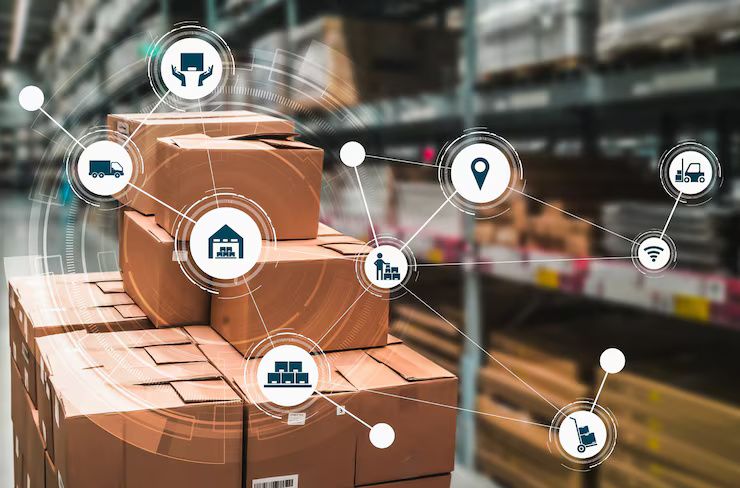
The benefits of AI in the supply chain and logistics
-
Demand forecast: Prerequisite customer needs patterns with accuracy when using AI-operated analysis.
Inventory optimization: Reduce overstay and understanding risk through monitoring of real -time warehouse.
-
Route optimization: The fastest, use AI algorithms to identify the fastest, most fuel-science delivery routes.
-
Stock automation: streamlining picking, packing and storage using robotics and AI vision systems.
-
Risk management of supply chains: Potential delays before affecting operations, identify supplier problems or disruptions.
Case of AI's most important use in logistics
- Future stays Maintenance: The prognosis for sensors and AI models will require service to vehicles or machines.
Autonomous Distribution: Self -driving trucks and drone are powered by AI to reduce delivery costs.
-
Robot process automation (RPA) : Order processing, invoicing and match checks automated
Wise Buy: AI performs sellers based on performance history and dynamic prices.
-
Real-time tracking: AI integrates IoT and GPS data to provide vivid visibility of goods during transport.
Top AI equipment for adaptation of supply series in 2025
1. IBM Sterling Supply Series
AI-controlled platform for collaboration with several entrances, inventory and demand planning.
2. SAP Integrated Trade Scheme (IBP)
The future of the forecast, S & OP and Inventory enables analysis and automation.
3. Llamasoft (by Coupa)
Supply chain design, simulation and what-advanced AI modeling for analysis.
4. O9 -Solution
AI-controlled platform for buying, supply and demand Crossing and decision making.
5. Blue vaginal (East JDA)
Uses machine learning to predict demand, manage logistics and optimize the offer.
6. Foreights
Visibility and late -time delay with AI with predictive ETA.
Emerging Trends in 2025
AI + IoT integration: Smart sensors and AI analysis give real -time supply chain visibility.
AI-driven ESG joints: Track carbon emissions, moral sourcing and regulatory farming using AI dashboard.
Hyperautomation: A combination of end-to-end to automate complex supply chain workflow to AI, RPA and APIs.
Cognitive AI: Systems that adapt and learn from data to improve decisions over time.
Digital twin technology: Virtual copies of supply chains operated by AI for real -time testing and landscape plan.
How to Choose the Right AI Logistics Tool
Scalability: Can the platform grow with your business?
Integration: Does it work with the current ERP, CRM or storage system?
Data security: For compliance with standards for GDPR, CCPA and ISO.
Ease of use: A user -friendly dashboard saves time training.
Seller support: Make sure you on continuous support, training and updates.
Challenges and Considerations
Data quality problems: AI models depend on accurate, real -time data.
High implementation costs: Initial investments in AI may be sufficient for SME.
Talent gap: AI and computer science require the requirement for Apscarting team.
Cyber security risk: The AI system requires strong security from data and attack violations.
Tips for Implementation
Start with pilot projects before full -scale AI -Finance.
Focus on areas with the highest ROI-as demand forecast or distribution of the last mile.
Collaborate with AI resolution providers to ensure customized distribution.
Keep people in loops AI improves the decision, but human monitoring is important.
Frequently asked questions
Q1: Can small and medium-sized companies (SMB) withstand AI-controlled logistics?
Yes, cloud-based AI tools and mother-in-law platforms have made AI more accessible to SME to use AI on a scale.
Q2: What is AI's return on supply chains?
The study suggests that activities that use AI in logistics see a decrease of up to 15-30% in logistics costs and improve customers' satisfaction.
Q3: Does AI humanitarian work in logistics replaces?
Not replaced - but changing roles. Common tasks are automated while humans focus on strategic functions.
Q4: How safe are the AI-based logistics platforms?
Most corporate level platforms provide encryption, match framework and access control.
Conclusion: AI Is the Future of Supply Chain Efficiency
AI brings revolution in the supply chain and logistics by bringing intelligence, speed and accuracy in all stages of the chain. Whether you are a global company or a growing business, and invest in AI tools for logistics in 2025 ensure better forecast, low costs and strong customer satisfaction.
Start in small, measure the results and score wisely because the future of logistics is automatic, date-driven and A-nhens.