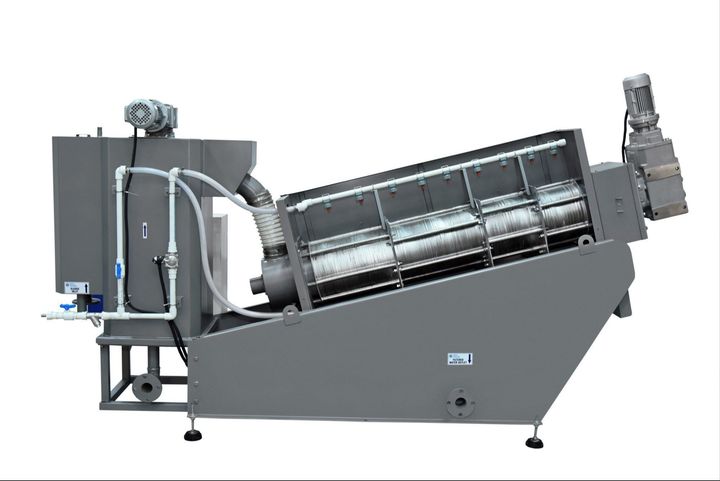
The concept of sludge dewatering developed alongside modern sanitation systems. As cities expanded and industrial activities increased, wastewater treatment plants were built to protect public health and the environment. These plants separate solids from water, but the remaining sludge must still be managed safely. A wastewater sludge dewatering machine reduces the moisture content of sludge, transforming it into a thicker, more manageable material.
There are several types of industrial sludge dewatering machine technologies. Common examples include belt filter presses, centrifuges, screw presses, and filter press for sludge treatment systems. Each technology applies mechanical force, pressure, or centrifugal action to separate water from solid particles. These systems are often integrated into a broader sludge thickening and dewatering system within a treatment facility.
Sludge dewatering machine manufacturers and sludge dewatering machine suppliers design equipment to meet different treatment capacities and sludge characteristics. Some systems are manually operated, while others function as an automatic sludge dewatering machine with minimal operator input.
Importance
Sludge management is an essential part of wastewater treatment. Without effective municipal sludge dewatering equipment, treatment plants would struggle with storage, transport, and final disposal of wet sludge. By removing water, dewatering systems reduce volume and weight, making downstream handling more practical.
This topic matters for several groups. Local governments rely on sludge dewatering equipment to maintain public sanitation systems. Industrial facilities use industrial sludge dewatering machine systems to comply with discharge regulations. Environmental agencies focus on sludge handling because improper management can lead to soil and water contamination.
Dewatering also supports environmental protection. When sludge is properly processed, it can be further treated for reuse in agriculture, land reclamation, or energy recovery. Advanced wastewater sludge management systems aim to reduce environmental impact while recovering resources such as biogas.
The following table shows how dewatering changes sludge characteristics:
| Parameter | Before Dewatering | After Dewatering |
|---|---|---|
| Typical Water Content | 95–99% | 60–80% |
| Volume | High | Significantly Reduced |
| Transportation Efficiency | Low | Improved |
| Storage Requirement | Large | Smaller |
By reducing moisture content, a sludge dewatering machine plays a central role in making sludge handling more efficient and environmentally responsible.
Recent Updates
Between 2024 and 2026, the wastewater sector has continued to focus on automation, digital monitoring, and energy efficiency. Many automatic sludge dewatering machine systems now include sensors that measure flow rate, solids concentration, and torque. These sensors allow operators to adjust performance in real time.
Another trend is integration with smart plant management platforms. Industrial facilities are connecting sludge dewatering equipment to centralized control systems. This enables predictive maintenance and data analysis, helping plants monitor performance and reduce downtime.
Energy use has also become a key focus. Newer designs of wastewater sludge dewatering machine systems aim to lower electricity consumption while maintaining solid separation efficiency. In addition, manufacturers are developing compact units suitable for decentralized or small-scale treatment plants.
Sustainability goals are influencing equipment design. Advanced wastewater sludge management systems increasingly combine thickening, digestion, and dewatering in a streamlined process. This integrated approach reduces footprint and simplifies operation.
Laws or Policies
Sludge dewatering practices are shaped by environmental regulations in many countries. Governments set standards for wastewater discharge, sludge disposal, and environmental protection. These rules influence how municipal sludge dewatering equipment is designed and operated.
In the United States, the Environmental Protection Agency (EPA) regulates biosolids under federal guidelines that define how treated sludge can be applied to land or disposed of. Facilities must meet limits for pathogens and heavy metals before reuse.
In the European Union, wastewater treatment and sludge management are guided by directives such as the Urban Waste Water Treatment Directive and related environmental policies. Member states implement national regulations aligned with these frameworks.
Many countries in Asia, Africa, and Latin America have updated wastewater regulations to address rapid urbanization. These regulations often require industries to pre-treat wastewater, increasing the need for industrial sludge dewatering machine systems.
Environmental compliance typically includes:
-
Meeting discharge standards for treated water
-
Reducing sludge volume before landfill or reuse
-
Monitoring and documenting sludge characteristics
-
Following safe transport and disposal practices
As regulations evolve, sludge dewatering machine manufacturers adapt designs to help facilities meet new environmental requirements.
Tools and Resources
A range of tools and resources support understanding and implementation of sludge dewatering systems.
Design and simulation software helps engineers size a sludge thickening and dewatering system based on sludge type and flow rate. These programs model parameters such as solids concentration and polymer dosage.
Industry organizations publish technical guidelines and reference materials. Examples include the Water Environment Federation (WEF) and the International Water Association (IWA), which provide educational documents on wastewater treatment technologies.
Government environmental agencies maintain online databases of regulatory standards and reporting requirements. These platforms help operators understand compliance obligations related to municipal sludge dewatering equipment.
Technical documentation from sludge dewatering machine manufacturers often includes performance charts, operating principles, and maintenance guidance. While these documents focus on specific models, they also explain general working concepts.
Training platforms and academic courses in environmental engineering provide foundational knowledge on sludge handling, filter press for sludge treatment systems, and advanced wastewater sludge management systems.
FAQs
What is a sludge dewatering machine and how does it work?
A sludge dewatering machine removes water from sludge produced during wastewater treatment. It works by applying mechanical pressure, gravity, or centrifugal force to separate liquid from solids. The result is a thicker material that is easier to transport and manage.
What types of sludge dewatering equipment are commonly used?
Common types include belt filter presses, centrifuges, screw presses, and filter press for sludge treatment systems. Each type uses a different mechanical principle. The choice depends on sludge characteristics, required dryness, and facility size.
Where is an industrial sludge dewatering machine typically used?
An industrial sludge dewatering machine is used in factories such as food processing plants, chemical facilities, textile mills, and paper mills. These industries generate wastewater that must be treated before discharge, and dewatering reduces the volume of resulting sludge.
What is the difference between municipal sludge dewatering equipment and industrial systems?
Municipal sludge dewatering equipment is designed for sewage treatment plants handling domestic wastewater from households and commercial buildings. Industrial systems are tailored to specific waste streams, which may contain higher levels of chemicals or solids.
How does an automatic sludge dewatering machine improve efficiency?
An automatic sludge dewatering machine uses sensors and control systems to adjust operating parameters. This reduces manual intervention and allows consistent performance. Automation can help maintain stable output even when sludge characteristics change.
Conclusion
A sludge dewatering machine is a key component of modern wastewater treatment. By reducing the water content of sludge, it supports efficient handling, transport, and final disposal or reuse. Various types of sludge dewatering equipment serve municipal and industrial applications, each based on distinct mechanical principles. Ongoing developments in automation and sustainability continue to shape advanced wastewater sludge management systems. Understanding these systems helps explain how communities and industries manage wastewater responsibly.